
Arizona Bankruptcy Laws: A Practical Overview for Residents
If you’re overwhelmed by debt, you’re not alone. Many Arizona households deal with job changes, medical bills, divorce, business slowdowns, or rising costs that make it hard to keep up. Understanding Arizona bankruptcy laws can help you make sense of your options and what a realistic “fresh start” might look like.
Bankruptcy is governed mostly by federal law, but Arizona-specific rules matter in the places that affect people most—especially what property you can protect, where your case is filed, and how local procedures play out. This page is a high-level overview meant to help you get oriented. It is general information, not legal advice for your particular situation.
How Bankruptcy Works in Arizona (The Big Picture)
Bankruptcy cases in Arizona are filed in the United States Bankruptcy Court for the District of Arizona. Even though the bankruptcy code is federal, you still must follow Arizona rules about exemptions (the property protections you can claim), and your case will be handled under local court procedures and timelines.
Most individual consumer cases fall into one of two paths:
You either seek to eliminate eligible debts and get a discharge, or you use a court-supervised plan to catch up, restructure, and repay some portion of what you owe over time. Which path fits best depends on your income, assets, goals, and the kinds of debts you have.
Bankruptcy typically involves filing schedules that list your income, expenses, property, and debts; attending a required meeting with a trustee; and completing approved credit counseling and debtor education courses. From there, the process depends heavily on the chapter you file and your specific facts.
What Makes Arizona Bankruptcy Laws Distinct
When people say “Arizona bankruptcy laws,” they’re usually referring to the Arizona-specific parts of a bankruptcy case—especially exemptions and certain local procedures—rather than the federal bankruptcy code itself. Here are the differences that most often matter to Arizona residents.
Arizona uses Arizona exemptions (not federal exemptions)
Bankruptcy exemptions are the rules that may protect certain property from being taken to pay creditors. Arizona is an “opt-out” state, which generally means Arizona residents must use Arizona’s exemption system instead of the federal exemption list (see Arizona Revised Statutes § 33-1133 (Exemptions; applicability)).
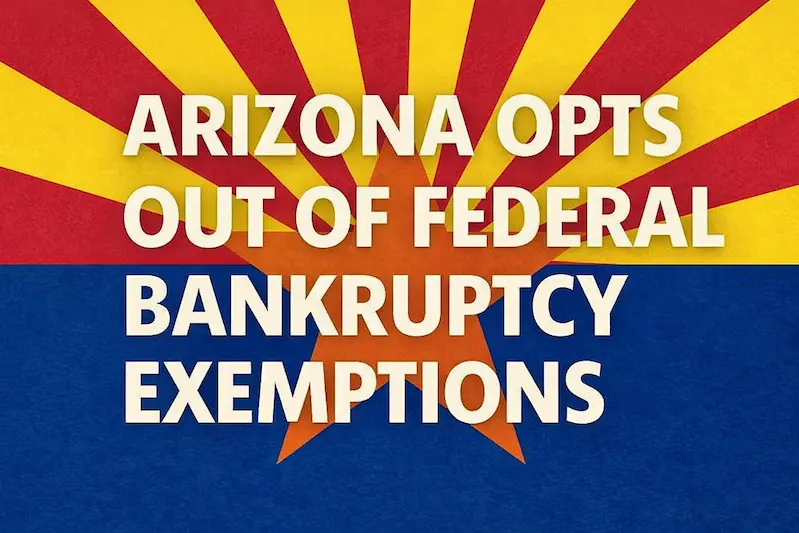
Because exemptions can affect whether you keep your home equity, vehicle equity, household items, retirement funds, and other property, they are one of the most important Arizona-specific topics in any case. For a clear, detailed breakdown, see our guide:
Arizona is a community property state
Arizona’s community property rules can affect how spouses’ income and debts are analyzed, even if only one spouse files. This is a common area of confusion, especially for couples who share household finances but have debt that’s mostly in one person’s name.
Community property issues can be very fact-specific, so it’s a good topic to discuss with a qualified bankruptcy attorney if you’re married, separated, or recently divorced.
Local filing and procedure details still matter
Even under federal law, every district has local forms, processes, and trustee practices that shape day-to-day expectations. In Arizona, where you live can also affect where you attend hearings or how a trustee schedules meetings and document requests.
None of this changes the overall purpose of bankruptcy, but it can change what paperwork you need, how quickly you must respond, and what is considered “normal” practice in your specific case.
The Two Most Common Paths: Chapter 7 and Chapter 13
Most Arizona residents considering bankruptcy are choosing between chapter 7 and chapter 13. The right choice depends on your income, your goals (like keeping a home or catching up on a car loan), and whether your situation fits the legal requirements for each chapter.
A Quick Snapshot of Chapter 7 in Arizona
Chapter 7 is often used when someone can’t realistically repay unsecured debts and needs relief sooner rather than later. Eligibility is commonly tied to income and a “means test,” and property protection depends heavily on Arizona exemptions.
This overview page is not intended to replace a full chapter 7 guide. For a deeper explanation of qualification, timelines, and what to expect, visit:
A Quick Snapshot of Chapter 13 in Arizona
Chapter 13 is a structured repayment plan, typically lasting 3 to 5 years, that may help people catch up on missed mortgage payments, manage certain priority debts, and keep important property while paying what the law requires based on income and assets.
If you’re considering a plan case, see the detailed guide here:
Chapter 13 Vehicle Cram Downs (briefly)
In some chapter 13 cases, it may be possible to reduce (or “cram down”) certain vehicle loans to more closely reflect the vehicle’s value and adjust the interest rate, but only when the legal requirements are met. This is a technical area with strict rules and exceptions.
If this is something you’ve heard about and want to understand without guesswork, start here:
What Bankruptcy Can and Can’t Do for Arizona Debtors
Bankruptcy can be powerful, but it has limits. People often feel more confident once they understand what is generally possible and what typically requires a different solution.
What bankruptcy often helps with
Bankruptcy commonly addresses unsecured debts like credit cards, personal loans, some medical bills, old utility balances, and certain lawsuit judgments. It can also stop collection activity through the automatic stay, which is the court order that generally pauses most collection efforts after a case is filed.
Debts that may not go away (or may need special attention)
Some debts are not automatically eliminated in bankruptcy, and some require additional legal steps. For example, child support and most recent tax debts often have special rules. Student loans can be particularly complex and may require a separate legal process to seek discharge.
If you have these kinds of debts, it doesn’t mean bankruptcy can’t help, but it does mean your plan should be built around the rules that apply to those obligations.
Key Arizona-Specific Concepts People Ask About
When Arizona residents research bankruptcy, a few issues come up again and again. Here are practical explanations without getting lost in technical detail.
“Will I lose my house or car?”
In Arizona, whether you keep a home or vehicle often turns on a mix of Arizona exemptions, how much equity you have, and whether you’re current on payments. Being behind on payments is a different problem than having equity, and the best approach depends on which issue is driving the risk.
If protecting property is your top concern, it’s wise to review Arizona exemptions and talk through realistic outcomes before filing.
“Do I need to be behind to file?”
Not necessarily. Some people file before accounts go into default, while others wait until collections are active. The timing can matter because it affects late fees, interest, lawsuits, garnishments, and your options for catching up on secured debts.
“What about wages and bank accounts?”
Arizona has rules that can affect wage garnishments and certain protections, but bankruptcy is often the mechanism that stops an active garnishment quickly through the automatic stay. Bank levies and frozen funds can be more time-sensitive, so getting advice early can be especially important if you’re already facing enforcement actions.
Quick Comparison Table: Where Arizona-Specific Rules Show Up
| Topic | Why it matters in Arizona cases |
|---|---|
| Exemptions (property protection) | Arizona generally uses Arizona exemptions, and these rules often determine what you can protect and what risks need to be addressed before filing. |
| Community property | Arizona community property rules can affect how spouses’ finances are evaluated, even when only one spouse files. |
| Local court procedures | The District of Arizona has local filing practices and trustee procedures that can shape timelines, document requests, and how meetings and hearings are handled. |
| chapter 13 plan tools | Catch-up strategies and certain vehicle loan options depend on meeting legal requirements and following local practice. |
What to Do Before You File in Arizona
If bankruptcy is on your radar, a few practical steps can help you avoid surprises and make better decisions.
Gather a clear picture of your finances
Try to compile recent pay stubs or income proof, a list of monthly expenses, and a list of debts with balances and account numbers. If you own a home or car, estimate your equity (market value minus loan balance) because exemptions and strategy often turn on equity.
Avoid “quick fixes” that create bigger problems
It’s common to feel pressure to borrow from family, drain retirement, sell property, or move debt around right before filing. Some actions can create complications in bankruptcy, even when your intentions are good. When possible, get advice before making major transfers or payments you might later regret.
Talk to a qualified Arizona bankruptcy attorney
The best outcomes usually come from matching the right chapter to the right goal and using Arizona exemptions correctly. A brief consult can help you understand your options, likely timeline, and what tradeoffs are involved.
Arizona Bankruptcy Guidance and Resources
Practical, plain-English guides for people across Arizona—built by a Phoenix-based bankruptcy law firm to help you understand your options and take the next step with confidence.
Frequently Asked Questions About Bankruptcy in Arizona
Do I have to live in Arizona for a certain amount of time before filing bankruptcy here?
You generally file bankruptcy in the federal district where you live, but the property exemption rules you can use may depend on how long you have lived in Arizona. If you moved recently, different exemption rules can sometimes apply. A bankruptcy attorney can help you identify which exemption system would be used in your situation.
Will filing bankruptcy stop a wage garnishment or lawsuit in Arizona?
In many cases, filing bankruptcy triggers an “automatic stay” that generally pauses most collection actions, including many lawsuits and garnishments. There are exceptions, and timing can matter if a creditor is already taking active enforcement steps. If you’re facing an urgent garnishment or court date, getting advice quickly is important.
Can I keep my house if I file bankruptcy in Arizona?
Whether you can keep a home often depends on your equity, whether you are current on the mortgage, and how Arizona’s exemption rules apply to your specific facts. Being behind on payments is a different issue than having equity. For a deeper explanation of property protection, see Arizona Bankruptcy Exemptions.
Can I keep my car if I file bankruptcy in Arizona?
Many people are able to keep a vehicle, but the answer usually depends on your equity, the loan status, and the exemption rules that may protect vehicle equity. If you are behind, the strategy can be different than if you are current but owe more than the car is worth. For more detailed Arizona-specific guidance, review Arizona Bankruptcy Exemptions.
What is the difference between Chapter 7 and Chapter 13 for Arizona residents?
Chapter 7 is often used when someone cannot realistically repay unsecured debts and needs a faster reset, while Chapter 13 is a repayment plan that can help people catch up on certain secured debts or manage priority debts over time. Which chapter fits best depends on income, assets, and goals. For a fuller breakdown, see Chapter 7 Bankruptcy in Arizona and Chapter 13 Bankruptcy in Arizona.
Does Arizona being a community property state change how bankruptcy works for married couples?
It can. Arizona’s community property rules may affect how household income and debts are analyzed, even if only one spouse files. Because the details can vary based on how debts were incurred and how finances are handled, it’s a good topic to discuss with an attorney before choosing a filing strategy.
Can bankruptcy remove all my debts, including taxes and student loans?
Some debts are commonly dischargeable, but others have special rules or may not be dischargeable in many cases. Recent taxes, child support, and most student loans often require careful review and may need separate analysis. A consultation can help you understand which debts are likely to be treated differently and what alternatives might exist.
Do I need to be behind on payments before I can file bankruptcy in Arizona?
Not necessarily. Some people file before they fall behind, while others file after collections or lawsuits begin. Timing can affect fees, interest, and your options for keeping secured property, so it’s usually best to evaluate your situation sooner rather than later.
What is a Chapter 13 vehicle cram down, and does it apply to every car loan?
A Chapter 13 vehicle cram down is a tool that may allow some filers to restructure certain vehicle loans based on the vehicle’s value and other legal requirements. It does not apply in every case and depends on meeting specific conditions. For a focused explanation, see Chapter 13 Vehicle Cram Downs.
Why You Can Trust This Guide
This page is written to help Arizona residents understand the basics before making decisions that can affect their finances, home, and family.
- It focuses on practical, Arizona-relevant issues (like exemptions and community property) that often change how a bankruptcy case feels in real life.
- It avoids promises or outcomes that depend on case-specific facts, because bankruptcy results vary.
- It points you to primary, authoritative sources so you can verify rules and learn more directly from courts and government agencies.
- It links to deeper guides when a topic needs more detail, rather than repeating information or oversimplifying.
Key Sources
For official information, forms, and plain-language explanations, these sources are a reliable starting point:
U.S. Bankruptcy Court — District of Arizona
United States Courts — Bankruptcy Basics and Forms
U.S. Trustee Program — Case Oversight and Consumer Information
Consumer Financial Protection Bureau — Bankruptcy Resources
Arizona State Legislature — Arizona Revised Statutes (Title 33, property and exemptions)
Bankruptcy Help Across Arizona
We work with individuals and families in the Phoenix metro area and in communities across Arizona. In office, phone and virtual appointments are available. Choose a city below to find local bankruptcy guidance, common issues we often see in that area, and practical next-step resources.